News & current affairs
01The daily bulletin
Standard German, tightly structured, high information density.
 DE
DEDictation turns listening into something you can measure. You write what you hear, then see the exact distance between your ear and the transcript.
No card required · Learn in English, practise in German
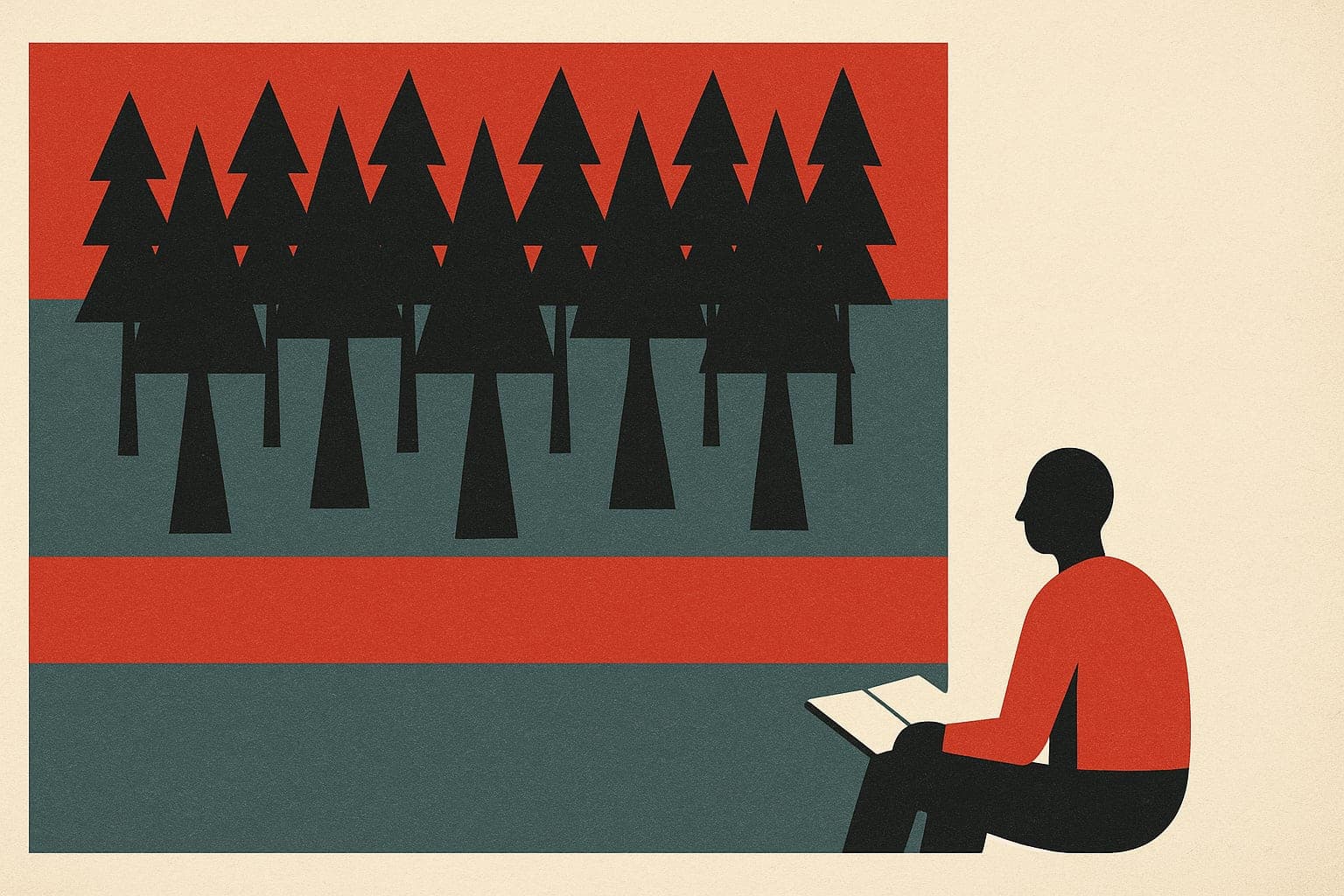
Fig. 01 — one clip, one line, one honest comparison
„Haben wir kurz Zeit?“ → hamma
Across WELE · all languages · this month
The listening gap
It is rarely the vocabulary. Your ear has not yet learned what happens to written German once it becomes speech at full speed.
Unstressed syllables collapse and neighbouring sounds merge, so the tidy gaps on the page never reach your ear.
A written d can arrive as t, a final e barely arrives at all. German spelling is consistent — just not with the sound.
Meaning often resolves at the end of the clause, so you must hold a whole sentence in your head before it clicks.
Inside a lesson
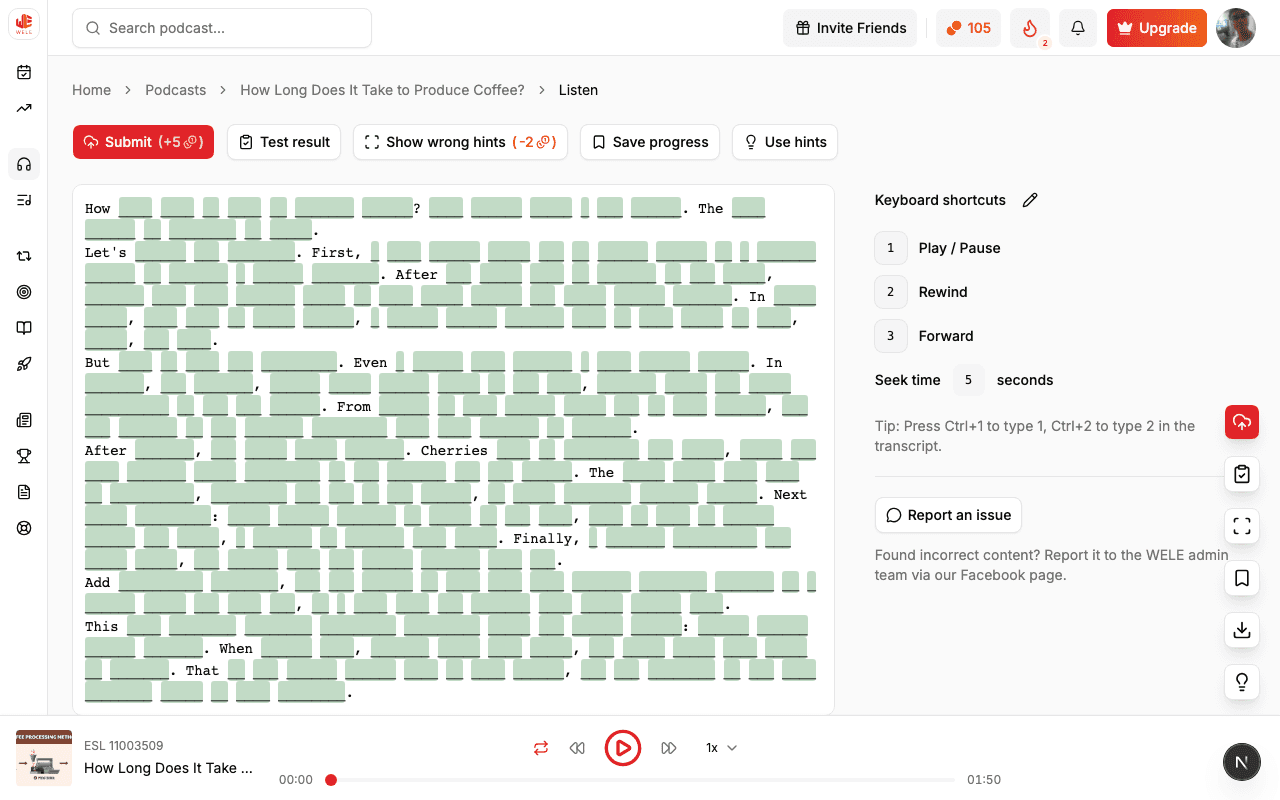
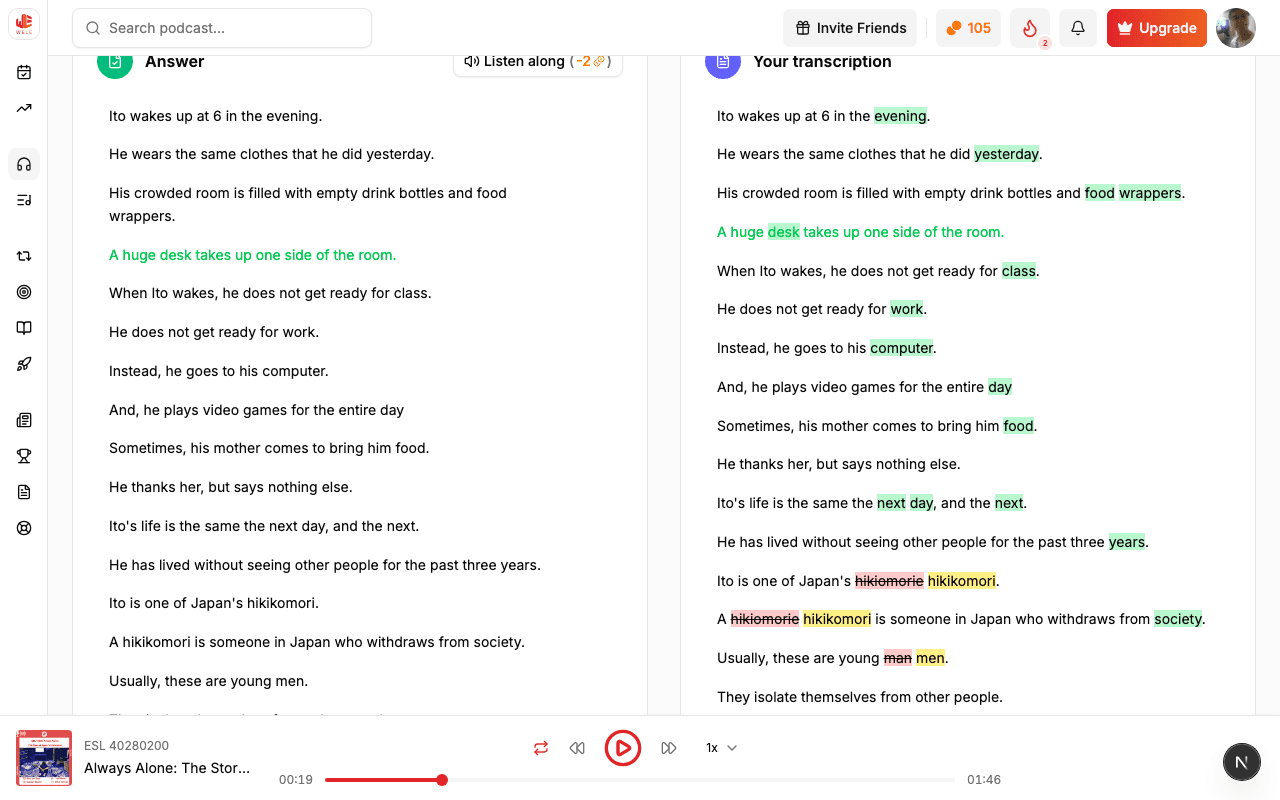
The interface stays quiet so your attention can stay on the sound. Work line by line, then put your version next to the original.
The WELE method
Dictation converts passive listening into deliberate practice: a prediction, precise feedback, and one more pass with better information.
Take in the whole thought before you go hunting for single words.
Commit to what you heard — endings, boundaries, word order and all.
Reveal the transcript and read every difference as a piece of information.
Difficult words come back later, timed to the moment before you forget.
Anatomy of sound
A transcript lets you slow one moment right down: where sounds merge, harden or fall away entirely — then replay that exact phrase until it is no longer a surprise.
Field notes · what the page says / what the ear receives
Written
haben wir
Heard
hammaassimilation
Written
Rad
Heard
Ratfinal devoicing
Written
ist das
Heard
issesspoken contraction
Three of hundreds. Every transcript you finish is another chance to catch one of them in the wild.
The listening shelf
Start where the articulation is clean, then move toward speech that was never slowed down for you. Save what works into playlists.
News & current affairs
01Standard German, tightly structured, high information density.
Graded audio
02Deliberate pacing and clean articulation — the safe first rung.
Culture & ideas
03Two people talking properly: overlaps, fillers, an actual argument.
Knowledge
04Long compound nouns you decode once, then recognise everywhere.
Life & stories
05The register where contractions and swallowed endings live.
Accent & variation
06Vienna, Zurich, Cologne — one language, differently tuned.
Built for deliberate practice
No noisy lesson map, no endless reward loop. The tools exist to help you practise, notice, and come back tomorrow.
A language becomes yours the day a voice stops sounding foreign.
About us
We build listening practice around real voices and feedback you can act on. The German edition has its own engineered, deliberately plain look, but the WELE principle underneath is unchanged: learn actively, understand your own mistakes, and make progress you can actually feel.
Simple pricing
The core experience stays free. Premium adds depth without turning your learning into a subscription puzzle.
Learner notes
“I could read a German newspaper and still lose a podcast in the first ten seconds. Writing the sentences down showed me the problem was never vocabulary — it was word boundaries.”
Owen
B1 learner · Manchester
“The endings were the breakthrough. Once I had to type them, I stopped guessing and started hearing them. My speaking tidied itself up as a side effect.”
Priya
Preparing for work in Berlin
“Fifteen minutes before work, one short clip. It is the only listening practice I have kept for more than a month, because I can see exactly what improved.”
Daniel
Self-taught learner · Chicago
Before you begin
Still weighing up whether dictation fits your level or your week? Start here.
Begin with one short passage. The next time that sound goes past, it may not get away from you.
Start learning free